Best Anti-Snoring Mouthpieces: Types Compared (2026 Guide)
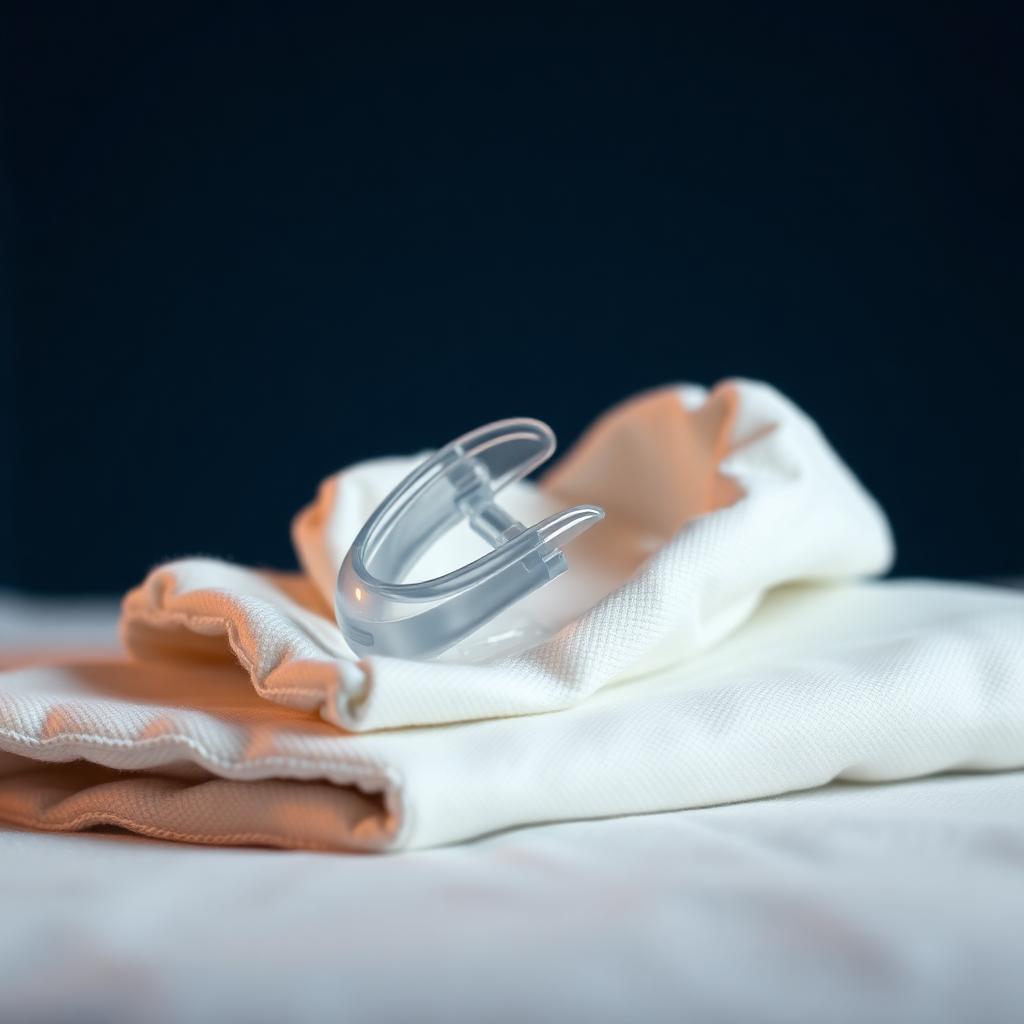
Anti-snoring mouthpieces are the most-searched, most-purchased, and most-misunderstood snoring solution on the market. They can be genuinely life-changing — or a $150 mistake sitting in your bathroom drawer. The difference comes down to matching the right device to the right cause of snoring.
This guide compares the four main categories of anti-snoring mouthpieces head-to-head, based on peer-reviewed clinical evidence, FDA classification, and guidance from the American Academy of Sleep Medicine (AASM) and the American Academy of Dental Sleep Medicine (AADSM). No affiliate links, no sponsored brands — just an honest map of what works, what doesn't, and how to decide.
How Anti-Snoring Mouthpieces Actually Work
Snoring is a vibration. It happens when the soft tissues at the back of your throat — the soft palate, uvula, and tongue base — relax during sleep and partially block the airway, causing turbulent airflow. Anti-snoring mouthpieces stop the vibration by physically enlarging or stabilizing that airway before it can collapse.
There are two mechanical strategies for doing this, and every mouthpiece on the market uses one of them:
- Advance the lower jaw — pull the mandible slightly forward, which drags the tongue and soft tissues away from the back of the throat. This is what MADs do.
- Hold the tongue forward — use gentle suction to keep the tongue tip from falling backward. This is what TSDs do.
If you don't know how loud your snoring is to begin with, measure it first. Our guide on how many decibels snoring reaches explains what levels are normal versus concerning, and our free Snore Severity Scale™ combines loudness with other risk factors to give you a single 0–100 rating.
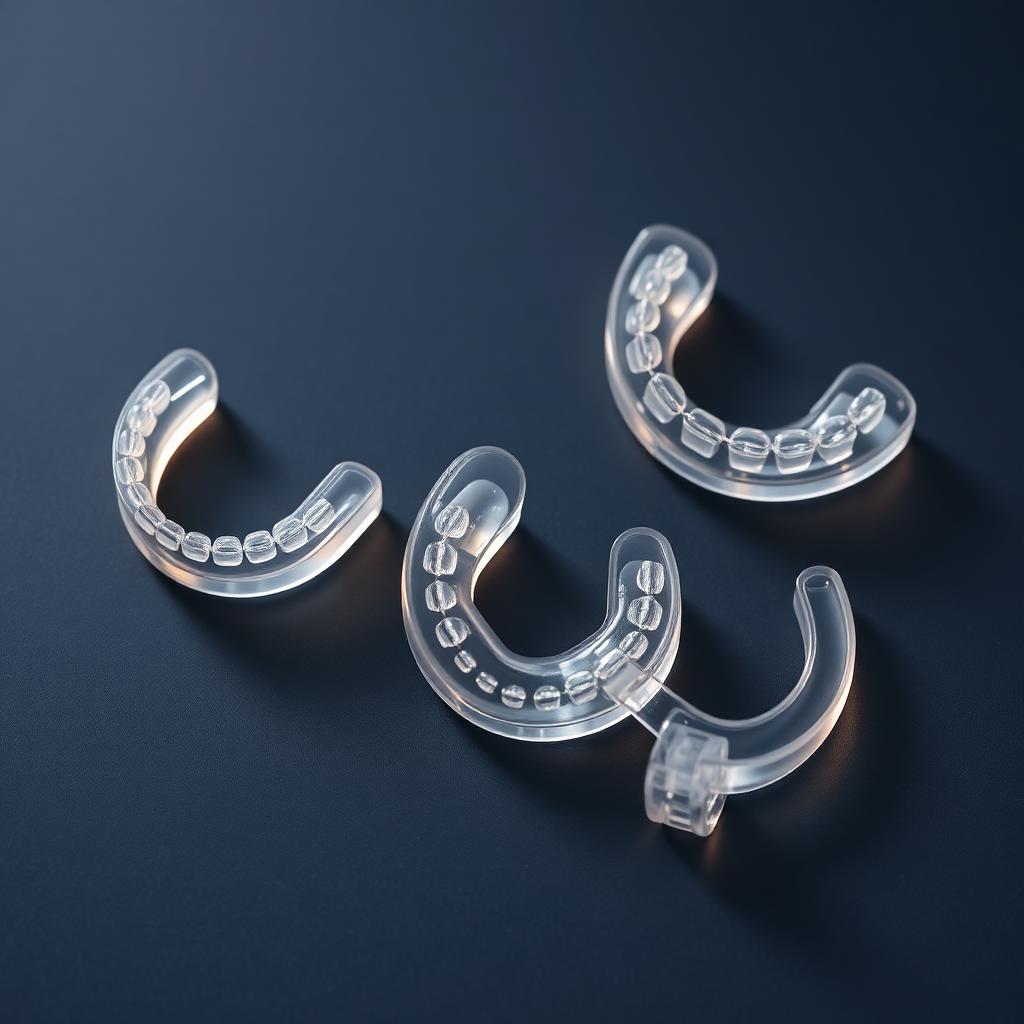
The 4 Types of Anti-Snoring Mouthpieces Compared
1. Custom-Fitted Mandibular Advancement Devices (MADs)
Custom MADs are made by a dentist trained in dental sleep medicine, using a precise mold of your teeth. They advance the lower jaw forward in adjustable increments — usually 0.5 mm at a time — until your snoring resolves without causing jaw pain. This is the gold standard.
- Effectiveness: Reduces snoring in ~85% of users; effective for mild-to-moderate obstructive sleep apnea (Cochrane, AASM).
- Comfort: Highest — the fit is exact and titration is gradual.
- Durability: 3–5 years typical lifespan.
- Cost: $1,500–$3,000 in the US; often partially covered by medical insurance when prescribed for OSA.
- Best for: Chronic loud snorers, diagnosed mild-to-moderate sleep apnea, people who've failed OTC devices.
2. Boil-and-Bite Mandibular Advancement Devices
Boil-and-bite MADs are over-the-counter thermoplastic trays that you soften in hot water and bite into to form a custom impression. They advance the jaw by a fixed or semi-adjustable amount. This is what most people mean when they Google "anti-snoring mouthpiece".
- Effectiveness: Reduces simple snoring in ~65–75% of users when fitted properly; less consistent for apnea.
- Comfort: Moderate — bulkier than custom, and fit quality varies dramatically by brand.
- Durability: 6–12 months typical lifespan.
- Cost: $50–$150.
- Best for: Occasional or mild snorers, people wanting a low-risk trial before committing to a custom device.
3. Tongue Stabilizing Devices (TSDs)
TSDs are soft silicone bulbs that use gentle suction to hold the tip of the tongue forward. They don't touch the teeth or jaw at all, which makes them uniquely useful for people who can't wear a MAD — including denture wearers, people with TMJ disorders, and those with extensive dental work.
- Effectiveness: Reduces snoring in ~60–70% of users; comparable to MADs for tongue-dominant snorers.
- Comfort: Divisive — many people love them, many can't tolerate the tongue soreness in week one.
- Durability: 12+ months typical lifespan.
- Cost: $60–$120.
- Best for: Denture wearers, people with TMJ or dental restrictions, mouth-breathers who fail MADs.
4. Anti-Snoring Chin Straps (Not a Mouthpiece — but Often Confused)
Chin straps are fabric bands that hold the mouth closed to force nasal breathing. They're not mouthpieces, but they get lumped in with them constantly. The evidence base is weak: studies show they don't meaningfully reduce apnea and only modestly help snoring, and only if your snoring is caused by mouth breathing with a clear nasal airway. Skip them unless a doctor specifically recommends one.
Head-to-Head: Which Mouthpiece Wins?
There's no single "best" — the right device depends on your snoring cause, dental health, budget, and tolerance. But we can rank them by scenario:
- Best overall (if budget allows): Custom-fitted MAD from a dentist.
- Best value: Semi-adjustable boil-and-bite MAD ($80–$150 range).
- Best if you have dental work or dentures: Tongue stabilizing device.
- Best for suspected sleep apnea: Nothing OTC — see a sleep specialist first.
- Best for occasional snoring (travel, colds, alcohol): Low-cost boil-and-bite MAD as a backup.
For a broader look at options that don't involve a device in your mouth, see our guide on how to stop snoring naturally and the impact of sleeping position — often the cheapest first step.
Curious how loud your snoring really is?
SnapSnoreScore uses your device's microphone to estimate snoring intensity and generate a Snore Score from 0 to 100 — entirely in your browser.
Side Effects & Who Should Not Use One
Anti-snoring mouthpieces are medical devices — FDA Class II — and they carry real, though usually mild, side effects. Being informed about them beforehand dramatically improves the chance you'll push through the first two weeks of adjustment instead of quitting.
Common short-term side effects (usually resolve in 1–2 weeks)
- Jaw or facial muscle soreness in the morning
- Excessive salivation during the first few nights
- Dry mouth (more common with TSDs)
- Mild tooth discomfort or pressure
- Small changes in how your teeth meet when you wake up (usually resolves within 30 minutes)
Do NOT use an over-the-counter mouthpiece if you have:
- Suspected or diagnosed moderate-to-severe obstructive sleep apnea (needs medical supervision)
- Central sleep apnea (mouthpieces do not help — CPAP or ASV is required)
- Loose teeth, active gum disease, or extensive dental restorations
- TMJ disorder or chronic jaw pain
- Full or partial dentures (MADs won't work; TSDs may be an option)
- Age under 18 (jaw is still developing)
Loud snoring accompanied by choking, gasping, or witnessed breathing pauses is a red flag for sleep apnea. Read snoring vs. sleep apnea and when snoring becomes dangerous before ordering a device online.
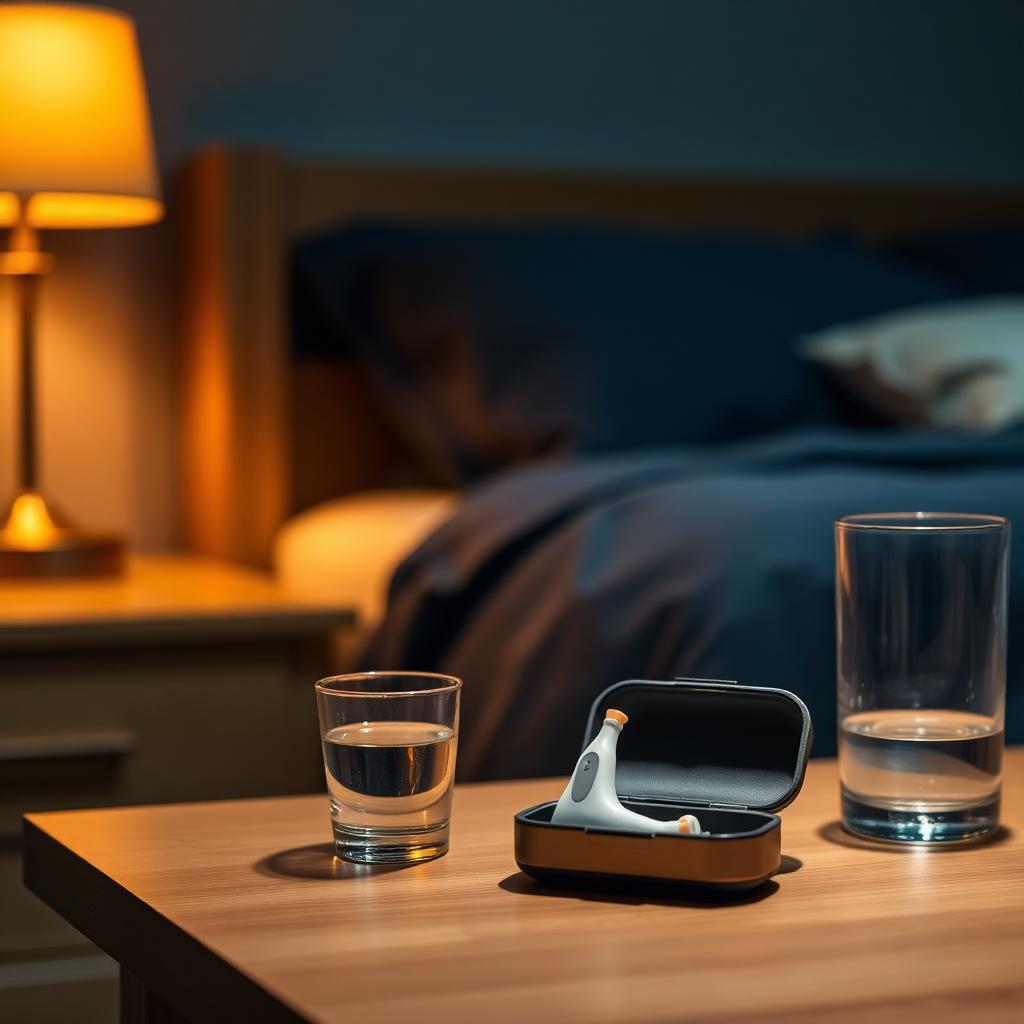
How to Get the Fit Right (This Is 80% of Success)
The single most common reason people quit anti-snoring mouthpieces is a bad fit — and the single most common reason for a bad fit is rushing the boil-and-bite process. Take your time.
- Follow the water temperature exactly. Too hot deforms the plastic; too cool means it won't mold. Use a thermometer if you have one.
- Bite gently and evenly for the full time the manufacturer specifies (usually 30–60 seconds). Don't clench.
- Advance the jaw gradually. On adjustable devices, start at the least-forward setting and move forward 1 mm every 2–3 nights only if snoring persists.
- Expect a break-in period. Sleep 3–5 nights in a row before judging — your jaw needs to adapt.
- Clean it every morning with cool water and a soft toothbrush. Deep clean weekly with denture cleaner. Never use hot water (deforms the plastic) or alcohol-based mouthwash (degrades the material).
- Store dry. Bacteria grow in damp cases; wipe the case and leave it open during the day.
Measuring Whether It's Actually Working
"I feel better" is not a measurement — and placebo effect on subjective sleep quality is enormous. If you're spending $150 (or $2,500) on a mouthpiece, get objective before-and-after data.
- Record 3 baseline nights without the device using a browser-based tool like SnapSnoreScore — all processing is local, no audio leaves your phone.
- Note your baseline Snore Score, average dB, and number of loud events above 60 dB.
- Fit the device and record 5 nights in the first two weeks (allowing for the adjustment period).
- Compare. A successful device typically reduces the Snore Score by 30–50% and cuts loud events by more than half.
- Ask your bed partner. Their qualitative feedback catches things dB meters miss — like whether the character of the snoring changed even if the volume didn't.
How severe is your snoring?
A free self-check score that combines your own estimates of loudness, frequency, and symptoms into a single 0–100 number. Takes under a minute. No sign-up.
This is SnapSnoreScore's own self-check model — not a validated clinical instrument such as STOP-BANG or the Epworth Sleepiness Scale, and not a diagnosis.
No result yet
Complete the questions to see your result
We don't show a score until you've answered every question yourself — a default score would not be your result.
- Estimated peak loudness
- Nights per week you snore
- Partner / household impact
- Daytime sleepiness
4 of 4 questions left.
Self-check score from your own answers — not a validated clinical screening tool and not a diagnosis. See our disclaimer.
When to Skip the Mouthpiece and See a Doctor
Anti-snoring mouthpieces are designed for primary snoring — noisy breathing without significant breathing pauses or oxygen drops. If any of the following describe your snoring, an OTC mouthpiece is the wrong first step:
- Your partner has witnessed you stop breathing, choke, or gasp for air during sleep
- You wake up unrefreshed no matter how long you sleep
- You experience morning headaches, dry mouth, or a sore throat regularly
- You fall asleep unintentionally during the day (while reading, watching TV, or — dangerously — driving)
- You have high blood pressure, atrial fibrillation, type 2 diabetes, or a BMI above 30
- Your snoring measured above 65 dB on multiple nights
In these cases, ask your primary care doctor for a referral to a sleep specialist. A home sleep test can rule out obstructive sleep apnea in a single night — and if apnea is present, an oral appliance may still be the answer, but one prescribed and titrated properly rather than guessed at from an Amazon listing.
Curious how loud your snoring really is?
SnapSnoreScore uses your device's microphone to estimate snoring intensity and generate a Snore Score from 0 to 100 — entirely in your browser.
The Bottom Line
Anti-snoring mouthpieces are one of the best-studied, most-effective non-surgical interventions for primary snoring. A well-fitted mandibular advancement device will meaningfully reduce snoring in 7 out of 10 users, and a custom-fitted device from a dental sleep medicine specialist will do it in nearly 9 out of 10 — often for years at a time.
But they aren't magic, and they aren't for everyone. The people who succeed measure their baseline, choose the device type that matches their anatomy and dental situation, take the two-week adjustment period seriously, and get help early if their snoring hints at something more serious than noise.
For the full picture of what causes snoring in the first place, why some people snore louder than others, and every evidence-based treatment option available, see our complete guide to snoring.
Frequently Asked Questions
What is the best anti-snoring mouthpiece?
For most simple snorers, a well-fitted mandibular advancement device (MAD) is the most effective over-the-counter option, reducing snoring by 50–70% in clinical studies. A custom-fitted MAD made by a dentist is more effective and more comfortable than a boil-and-bite version, but costs 10–20x more. Tongue stabilizing devices (TSDs) are a strong alternative if you can't tolerate a MAD or have dental work that rules one out.
Do anti-snoring mouthpieces actually work?
Yes — for the right person. Peer-reviewed research and Cochrane reviews show mandibular advancement devices reduce snoring intensity in roughly 70–85% of users and lower the apnea-hypopnea index in mild to moderate sleep apnea. They don't work well for people whose snoring is primarily nasal in origin, or those with severe apnea, who typically need CPAP.
MAD vs TSD — which anti-snoring mouthpiece is better?
MADs (mandibular advancement devices) are more effective on average and better tolerated long-term for most people. TSDs (tongue stabilizing devices) are the better choice if you have missing teeth, extensive dental work, TMJ problems, or you simply cannot tolerate a bulky tray. Both are FDA-cleared for snoring; MADs have more supporting evidence.
Are boil-and-bite anti-snoring mouthguards safe?
FDA-cleared boil-and-bite MADs are generally safe for short-term use in healthy adults with good dental health. However, they should not be used if you have loose teeth, gum disease, TMJ disorders, central sleep apnea, or full dentures. Long-term use can cause bite changes; a screening by a dentist trained in dental sleep medicine is strongly recommended.
How much does a good anti-snoring mouthpiece cost?
Over-the-counter boil-and-bite MADs typically cost $50–$150 and last 6–12 months. Mail-order semi-custom devices run $150–$300. Custom-fitted MADs from a dentist range from $1,500–$3,000 in the US and often last 3–5 years — many are partially covered by medical insurance when prescribed for sleep apnea.
What are the side effects of anti-snoring mouthpieces?
Common short-term side effects include jaw soreness, excessive salivation, dry mouth, and mild tooth discomfort — most fade within 1–2 weeks. Long-term use of MADs can cause small changes in bite alignment. Rare but serious issues include TMJ pain and loosening of dental work. Stop use and see a dentist if pain persists beyond two weeks.
Can I use an anti-snoring mouthpiece if I have sleep apnea?
Only under medical supervision. Oral appliances are an accepted treatment for mild to moderate obstructive sleep apnea, but they should be prescribed and fitted by a dentist trained in dental sleep medicine, following a sleep study. Never use an over-the-counter mouthpiece to self-treat suspected sleep apnea — untreated severe apnea is dangerous.
How do I know if a mouthpiece is helping my snoring?
Measure before and after. Record a baseline night without the device using a tool like SnapSnoreScore, then record 3–5 nights with the device fitted. Look for a lower Snore Score, fewer loud events above 60 dB, and — most importantly — feedback from your bed partner. A 30–50% reduction in loud snoring events is a realistic success benchmark.
Sources & further reading
This article references the following authoritative organizations and peer-reviewed sources.
Related Articles

How To Stop Snoring Naturally (7 Methods That Help)
Snoring vs Sleep Apnea: What's the Difference?
How Many Decibels Is Snoring? Average dB Levels (30–90 dB)

Is Snoring Dangerous? When You Should Be Concerned
Best Sleeping Position To Stop Snoring (Backed by Science)