Best Sleeping Position To Stop Snoring (Backed by Science)
If there's one single change that can make the biggest immediate difference to your snoring, it's how you position your body when you sleep. Unlike weight loss, which takes months, or avoiding alcohol, which requires lifestyle change, your sleeping position is something you can modify tonight — and potentially see results by tomorrow morning.
But which position is actually best? The internet is full of conflicting advice, and what works for one person may not work for another. In this article, we'll break down the science behind each major sleeping position and its effect on snoring, give you practical strategies for making the switch, and help you find the position that works best for your body.
To understand why position matters, it helps to know the basic mechanics of snoring. Snoring occurs when air flows past relaxed tissues in the throat, causing them to vibrate. Anything that narrows the airway — gravity pulling the tongue backward, nasal congestion, or tissue swelling — increases the turbulence of airflow and the volume of snoring. For a deeper explanation, see our complete guide to snoring.
Back Sleeping: The Worst Position for Snoring
If you sleep on your back (the supine position), gravity is working against you all night. When you're face-up, your tongue, soft palate, and uvula all fall backward toward the back of your throat under the force of gravity. This narrows the airway significantly, and the restricted space forces air through a smaller opening at higher velocity — creating the vibrations we hear as snoring.
Research published in the journal Sleep found that back sleeping increases snoring severity by an average of 50-80% compared to side sleeping. For some people, the difference is even more dramatic: certain individuals only snore when sleeping on their back and are completely silent on their side. These cases are classified as 'positional snoring' or 'positional obstructive sleep apnea.'
Back sleeping also worsens sleep apnea in people who have it. The same gravitational collapse that causes snoring can actually cause complete airway obstruction, leading to breathing pauses. If you've been told you snore loudly on your back and you experience daytime sleepiness, it's worth getting evaluated. Learn more in our article on snoring vs. sleep apnea.
Side Sleeping: The Gold Standard
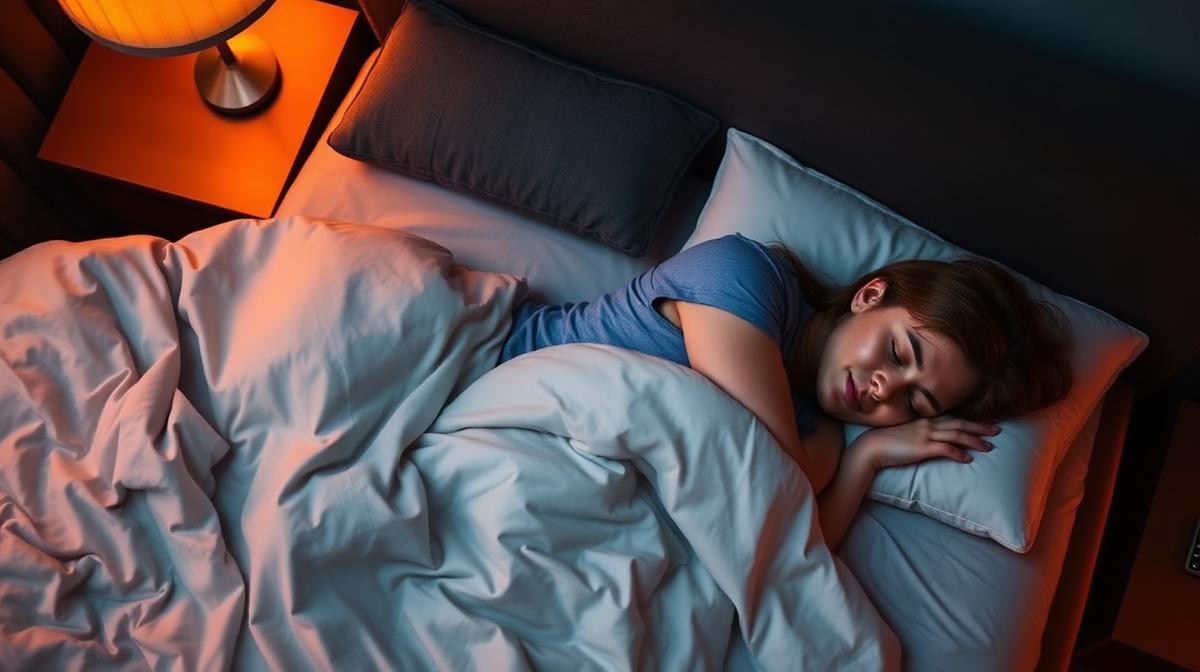
Side sleeping (lateral position) is consistently recommended by sleep medicine specialists as the best position for reducing snoring. When you sleep on your side, gravity pulls the tongue and throat tissues laterally rather than backward, keeping the airway more open and allowing air to flow freely.
Studies show that transitioning from back sleeping to side sleeping can reduce the Apnea-Hypopnea Index (AHI — a measure of breathing disruptions) by 50% or more. Snoring volume typically decreases proportionally, and many positional snorers stop snoring entirely when they stay on their side.
Both the left and right sides are effective for reducing snoring. However, the left side is often preferred because it may improve blood circulation and reduce acid reflux — a condition that can itself contribute to throat irritation and snoring. Pregnant women in particular are advised to sleep on the left side for optimal blood flow.
How to Train Yourself to Sleep on Your Side
If you've been a back sleeper for years, switching to side sleeping takes deliberate effort. Here are proven strategies:
- Tennis ball method: Place a tennis ball in a sock and pin it to the back of your sleep shirt, or wear a backpack with a ball inside. Rolling onto the ball is uncomfortable enough to train your body to stay on its side within 1-2 weeks.
- Body pillow: Hugging a full-length body pillow provides support and makes side sleeping feel more natural and comfortable. It also prevents you from rolling onto your back.
- Pillow behind the back: Place a firm pillow along your back to create a physical barrier against rolling over.
- Positional sleep devices: Commercial products like anti-snoring belts and positional therapy devices are designed to keep you on your side throughout the night.
Stomach Sleeping: Effective but Problematic
Sleeping on your stomach (prone position) does reduce snoring for the same basic reason as side sleeping: gravity can't pull the tongue and soft tissues backward into the airway. In fact, some studies show that prone sleeping can be even more effective than lateral sleeping for keeping the airway open.
However, stomach sleeping comes with significant downsides that make it a poor long-term solution:
- Neck strain: Sleeping face-down requires turning your head to one side, which puts sustained rotational stress on the cervical spine. Over time, this can lead to chronic neck pain and stiffness.
- Back problems: The prone position flattens the natural curve of the spine and can cause lower back pain, especially for people who already have spinal issues.
- Nerve compression: The twisted head position can compress nerves in the neck, potentially causing tingling or numbness in the arms and hands.
- Facial pressure: Pressing your face into a pillow can cause skin irritation, wrinkles, and jaw pain over time.
For most people, side sleeping provides nearly equivalent snoring reduction without these drawbacks. If you're currently a stomach sleeper, transitioning to side sleeping maintains the snoring benefits while protecting your spine and neck.
Elevated Sleeping: The Power of Incline
Elevating your upper body during sleep — typically by 15 to 30 degrees — is an effective complementary strategy that works alongside any sleeping position. Elevation helps reduce snoring through several mechanisms:
- Gravity assists drainage: Nasal congestion drains more effectively when the head is elevated, reducing the stuffiness that contributes to snoring.
- Reduced tissue collapse: A slight incline keeps the throat tissues under less gravitational load, even when sleeping on the back.
- Improved breathing mechanics: Elevation opens the chest slightly, making it easier for the diaphragm to function efficiently.
There are several ways to achieve head elevation:
- Wedge pillow: A triangular foam wedge provides consistent, gradual elevation. Look for one that elevates your entire upper body, not just your head — a pillow that only lifts the neck can actually worsen snoring by kinking the airway.
- Adjustable bed frame: If budget allows, an adjustable bed lets you dial in the exact angle that works best for you. Many couples find that one partner's side can be elevated while the other remains flat.
- Bed risers: Placing 4-6 inch blocks under the headboard legs raises the entire head end of the bed at a gentle angle. This is a low-cost option that works well.
Pillow Choice Matters More Than You Think
Your pillow directly affects your airway alignment and can either help or hinder your anti-snoring efforts. The wrong pillow can negate the benefits of side sleeping, while the right one can amplify them.
For Side Sleepers
A side-sleeping pillow should be thick enough to fill the gap between your ear and the mattress, keeping your head and neck aligned with your spine. If the pillow is too thin, your head drops toward the mattress, compressing the airway on one side. If it's too thick, your head is pushed upward, creating a kink in the opposite direction.
Memory foam and latex pillows tend to maintain their height better than down or polyester fill, which can compress flat during the night. Some pillows are designed specifically for side sleepers, with a contoured shape that cradles the head and supports the neck.
For Back Sleepers
If you must sleep on your back, use a relatively thin pillow that supports the natural curve of your neck without pushing your head too far forward. A pillow that's too thick pushes the chin toward the chest, narrowing the airway — the opposite of what you want. Cervical pillows with a built-in neck roll can help maintain proper alignment.
Measuring the Impact of Position Changes
One of the challenges with sleeping position changes is that you can't observe yourself sleeping. How do you know if you actually stayed on your side all night? And how do you measure whether the change made a difference?
This is where tracking tools become invaluable. SnapSnoreScore measures your snoring throughout the night using your phone's microphone, giving you a Snore Score from 0 to 100 each morning. All processing happens locally — nothing is recorded or stored — so your privacy is completely protected. Not sure if you snore at all? Here's how to know if you snore.
Try running SnapSnoreScore for a few nights in your current position to establish a baseline, then switch to side sleeping and compare your scores. The data makes it easy to see whether the change is working — and how much of an improvement it's delivering. You can also check how loud snoring typically is to put your results in context.
Combining Position with Other Strategies
Sleeping position is one of the most powerful tools against snoring, but it works best in combination with other strategies. For maximum effect, consider combining side sleeping with:
- Avoiding alcohol within 3-4 hours of bedtime
- Maintaining a healthy body weight
- Keeping the bedroom air humidified
- Using nasal strips if nasal congestion is a factor
- Staying well-hydrated throughout the day
For a comprehensive list of evidence-based approaches, see our article on how to stop snoring naturally. And remember: if your snoring is severe, involves breathing pauses, or is accompanied by excessive daytime sleepiness, talk to your doctor to rule out more serious conditions.
Tonight, try switching to your side, adjusting your pillow height, and using SnapSnoreScore to measure the difference. You might be surprised how much one simple position change can do.
Curious how loud your snoring really is?
SnapSnoreScore uses your device's microphone to estimate snoring intensity and generate a Snore Score from 0 to 100 — entirely in your browser.
Frequently Asked Questions
What is the best sleeping position to stop snoring?
Side sleeping (lateral position) is the most effective position for reducing snoring. It prevents the tongue and soft palate from collapsing backward into the airway, which is the primary cause of positional snoring. Studies show side sleeping can reduce snoring volume by 50% or more.
Does sleeping on your stomach help with snoring?
Stomach sleeping (prone position) does keep the airway open and can reduce snoring, but it's generally not recommended due to the strain it places on the neck and spine. It can cause neck pain, back problems, and nerve compression over time. Side sleeping offers similar snoring benefits without these drawbacks.
Should I elevate my head to stop snoring?
Elevating your head 15-30 degrees can help reduce snoring by preventing nasal congestion from pooling and keeping the airway slightly more open. A wedge pillow or adjustable bed frame can achieve this. It's especially effective when combined with side sleeping.
How do I stay on my side while sleeping?
Try the tennis ball technique (attach a tennis ball to the back of your sleep shirt), use a body pillow for support, or invest in a contoured side-sleeping pillow. Most people can train themselves to side sleep within 1-2 weeks of consistent practice.
Sources & further reading
This article references the following authoritative organizations and peer-reviewed sources.